|
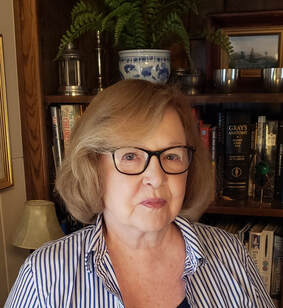
CONNIE WELLS
named Woman Physicist of the Month by the American Physical Society |
|
CONNIE WELLS has a Master of Science Degree in Physics from The University of Kansas. After teaching Physics and AP Physics at the high school level for over twenty five years, Connie is now an adjunct instructor of physics at Rockhurst University in Kansas City, Missouri. She has been active in test scoring and development for The College Board and was a Regional Winner of the Siemens Award for Advanced Placement Teaching sponsored by The College Board and The Siemens Foundation and was awarded the Rockers Award for Greater Kansas City Area Outstanding Teacher in Science in 2008. As a workshop leader and consultant, she has presented physics teacher training institutes throughout the United States and abroad—including Edmonton (AB, Canada), Hawaii, Saipan (Northern Marianas Islands), Barranquilla (Colombia), Bangkok, Skopje (Macedonia), Shanghai, Tokyo, Harbin (China), Taipei (Taiwan), Hangzhou (China), and Beijing. She is the author of several physics review guides produced by major publishers and of documents and focus booklets for AP Physics published by The College Board. Connie has been Chair of the Committee on Teacher Preparation for the American Association of Physics Teachers. In August, 2015, she was named Woman Physicist of the Month by the American Physical Society.
COURSE AGENDA: Marin on the Bay AP Physics 1 Summer Institute
Day 1
Introductions
Course and Exam Description and Course Planning (2 hours)
Format of tests
Analysis of 2019 multiple-choice
Labs and demos (Poppers lab)
Pivot
Day 2
Diversity and Inclusion (1 hour)
Strategies and Pedagogical Tools (3 hours)
Syllabus Development/Audit
Analysis of Paragraph free response
Design of labs-Inquiry based, argumentation, peer review
Lab report expectations
Newton’s Second law lab
Day 3
AP Classroom and AP Daily (2 hours)
Develop Rotation unit curriculum
How AP tests are developed/scored
Equipment that students need to be familiar with, computer probes
Computer lab exploration of web sources: pHet, oPhysics, Physics Aviary
AAPT, publications and information
Analysis of QQT Free Response
Book discussion
Labs, demos (rotation inquiry lab)
Day 4
Assess and Reflect (2 hours)
Physics 1 workbook
Analysis of 2021 experimental design free response question
TIPERs
Unofficial lab manual
Labs and demos (Dance to the beat lab)
Sharing
Wrap up
For participants: Please Bring
COURSE AGENDA: Marin on the Bay AP Physics 1 Summer Institute
Day 1
Introductions
Course and Exam Description and Course Planning (2 hours)
Format of tests
Analysis of 2019 multiple-choice
Labs and demos (Poppers lab)
Pivot
Day 2
Diversity and Inclusion (1 hour)
Strategies and Pedagogical Tools (3 hours)
Syllabus Development/Audit
Analysis of Paragraph free response
Design of labs-Inquiry based, argumentation, peer review
Lab report expectations
Newton’s Second law lab
Day 3
AP Classroom and AP Daily (2 hours)
Develop Rotation unit curriculum
How AP tests are developed/scored
Equipment that students need to be familiar with, computer probes
Computer lab exploration of web sources: pHet, oPhysics, Physics Aviary
AAPT, publications and information
Analysis of QQT Free Response
Book discussion
Labs, demos (rotation inquiry lab)
Day 4
Assess and Reflect (2 hours)
Physics 1 workbook
Analysis of 2021 experimental design free response question
TIPERs
Unofficial lab manual
Labs and demos (Dance to the beat lab)
Sharing
Wrap up
For participants: Please Bring
- Meter stick or measuring tape
- Graphing calculator
- Graph paper, pencil, ruler
- Text book presently used
- School calendar for planning
- Your favorite demo or lab idea to share
- Your enthusiasm
Connie can be contacted at [email protected]