|
Julio Cabral
I am a confident communicator; able to deliver clear and enthusiastic presentations to diverse audiences. My passion for learning and advising others has been personally fulfilling and I look forward to growing and sharing my experiences and knowledge to impact today’s youth and fellow educators. It would be a pleasure and privilege to work with teachers at the 2024 Summer Institute |
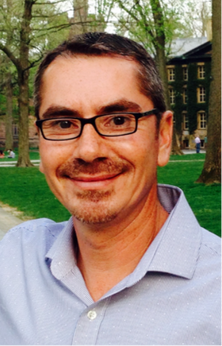
|
Julio can be contacted at
JULIO CABRAL
For 29 years, I worked with Standard, honor, and AP high school students; I have taught high school AP Language courses and I have a clear understanding of the requirements teachers and students must learn and master before entering an AP language course.
I have extensive training in AP concepts. Concurrently working as an AP teacher, I started attending College Board AP institutes in 2000, that training broadened in 2008 when I became a College Board Reader. As an AP Reader I was responsible for the evaluation and scoring of the Free-Response section of the AP Exam. In 2014, I became an AP College Board Consultant for the Western Regional Office, I have presented and shared my expertise with other education professionals, I train both new and experienced educators throughout the Western Regional states. In addition, I served as a member of the AP Spanish Language and Culture Test Development Committee; I was one of eight dedicated educators that played a critical role in the preparation of the AP Course Description and AP Exam. As a Committee member I actively participated in face to face meetings to develop, review, and revise the AP Spanish Language and Culture Curriculum, Exams and Instructional Resources.
I have taught AP Summer Institutes at numerous one-day and four-day workshops for AP Spanish Language throughout the Southwestern and Western regions of the U.S.
I developed a rigorous and high level curriculum for all Spanish Native Speaker classes at Hueneme High School. I have served as the Department Chair of the ELD Department and I am also responsible for the creation and organization of an AVID class in Spanish, directed to ELD students. I was a member of the Leadership Team and I am working on the creation and development of a Dual Immersion Program.
At a District level I presented training sessions for teachers on the vertical team. In addition, I have also presented sessions on reading and analytical strategies at in-service conferences to cross curriculum colleagues.
COURSE DESCRIPTION
This workshop provides professionals with opportunities to learn the structure of the AP Spanish Language and Culture Course and Exam. The course will use the World Language National Standards as well as the new Common Core Standards. The themes and organizing concepts will be examined and integrated into sample lessons and activities. The workshop will provide sample materials and classroom activities relating to the exam and its recent changes to the course. Recommendations on how to create and submit a syllabus will be shared. Information, skills, and strategies will be discussed, practiced, and shared to help prepare language students for the course and successful growth in language acquisition. Participants will be actively participating and sharing best practices with the group. The entire session will be conducted in Spanish.
By the end of the workshop, the participants will:
What to bring:
Course Attendance / Participation:
In order to receive full credit, students will need to participate actively and engage in all discussions during the workshop, along with engaging and working on a number of group activities. Attendance is also required to receive full credit. Participants will need to be present on all workshop days, at a minimum of 90% of each day. 20% of the overall course grade is based on attendance and participation.
Assignments:
Due Date
Authentic source research
Day 1
Thematic Unit development / Teaching Activity development
Day 4
Presentations of Thematic Units / Teaching Activity
Day 4
Agenda
Day 1: Review and introduction to the AP Spanish Language and Culture Course and Exam.
Day 2: Integration and development of the interpretative mode of communication; emphasis on Section I, Multiple Choice Part A and B.
For 29 years, I worked with Standard, honor, and AP high school students; I have taught high school AP Language courses and I have a clear understanding of the requirements teachers and students must learn and master before entering an AP language course.
I have extensive training in AP concepts. Concurrently working as an AP teacher, I started attending College Board AP institutes in 2000, that training broadened in 2008 when I became a College Board Reader. As an AP Reader I was responsible for the evaluation and scoring of the Free-Response section of the AP Exam. In 2014, I became an AP College Board Consultant for the Western Regional Office, I have presented and shared my expertise with other education professionals, I train both new and experienced educators throughout the Western Regional states. In addition, I served as a member of the AP Spanish Language and Culture Test Development Committee; I was one of eight dedicated educators that played a critical role in the preparation of the AP Course Description and AP Exam. As a Committee member I actively participated in face to face meetings to develop, review, and revise the AP Spanish Language and Culture Curriculum, Exams and Instructional Resources.
I have taught AP Summer Institutes at numerous one-day and four-day workshops for AP Spanish Language throughout the Southwestern and Western regions of the U.S.
I developed a rigorous and high level curriculum for all Spanish Native Speaker classes at Hueneme High School. I have served as the Department Chair of the ELD Department and I am also responsible for the creation and organization of an AVID class in Spanish, directed to ELD students. I was a member of the Leadership Team and I am working on the creation and development of a Dual Immersion Program.
At a District level I presented training sessions for teachers on the vertical team. In addition, I have also presented sessions on reading and analytical strategies at in-service conferences to cross curriculum colleagues.
COURSE DESCRIPTION
This workshop provides professionals with opportunities to learn the structure of the AP Spanish Language and Culture Course and Exam. The course will use the World Language National Standards as well as the new Common Core Standards. The themes and organizing concepts will be examined and integrated into sample lessons and activities. The workshop will provide sample materials and classroom activities relating to the exam and its recent changes to the course. Recommendations on how to create and submit a syllabus will be shared. Information, skills, and strategies will be discussed, practiced, and shared to help prepare language students for the course and successful growth in language acquisition. Participants will be actively participating and sharing best practices with the group. The entire session will be conducted in Spanish.
By the end of the workshop, the participants will:
- Be more familiar with the AP Language and Culture program
- Be familiar with the AP Language and Culture exam
- Be able to identify and select instructional materials and resources including technology
- Be able to identify instructional strategies and best practices for success in an AP Spanish Language and Culture course and exam
- Be able to identify possible tasks, skills and strategies for the changes in the exam
- Be able to develop and modify their existing curriculum to support the needs of their students.
What to bring:
- Copies of an activity, game, project that has worked well in your course previously.
- A laptop computer is recommended.
Course Attendance / Participation:
In order to receive full credit, students will need to participate actively and engage in all discussions during the workshop, along with engaging and working on a number of group activities. Attendance is also required to receive full credit. Participants will need to be present on all workshop days, at a minimum of 90% of each day. 20% of the overall course grade is based on attendance and participation.
Assignments:
Due Date
Authentic source research
Day 1
Thematic Unit development / Teaching Activity development
Day 4
Presentations of Thematic Units / Teaching Activity
Day 4
Agenda
Day 1: Review and introduction to the AP Spanish Language and Culture Course and Exam.
- Presentations: Warm-up activities
- Overview and agenda
- The year of my penny
- Guiding the blind
- Activities for the first school week
- The purpose of the Exam and its value
- AP Audit
- Equity and Access
- AP Central and AP Community
- Parking Lot/Shareable link
- Finding AP books and materials
- Types of students in our AP classes
- Developing and integrating the three modes of communication
- Understanding the National Standards and the 5 C’s
- Understanding of the Cultural component of the AP Spanish Course
- Integrating the six AP Spanish Language and Culture themes
- Building an AP Program, collaboration, how to involve all teachers
- How to develop a complete lesson plan
- Preparing a Thematic Unit
- The importance of Essential Questions
- Using authentic resources
- Individual and group projects to incorporate culture
- Thematic Journal
- Collaboration and ideas (homework assignment: Thematic Unit development / Teaching Activity)
Day 2: Integration and development of the interpretative mode of communication; emphasis on Section I, Multiple Choice Part A and B.
- Warm up activity
- Review of the AP Spanish and Culture Exam Format
- Interpretive Communication: Print Texts, Print and Audio Texts Combined, and Audio Texts.
- Types of question that come in the AP Exam
- Types of texts / Readings in the AP Exam
- Patterns in the AP Exam
- Skills and strategies to help students understand different types of texts.
- Quick reading with understanding, “lectura del minuto”
- Understanding literature, “Highlighting with a purpose”
- Analyzing different types of texts, “Árbol analítico”
- Language and academic vocabulary
- The importance of group work
- Technology in AP Spanish
- Resources for the teacher and student use
- Collaboration and ideas (homework assignment: Thematic Unit development / Teaching Activity)
- Warm up activity
- Interpersonal Communication: Email reply
- Activities
- Developing interpersonal writing skills
- Strategies for success
- Scoring Criteria
- Rubrics and assessments
- What it means to get a “5”
- Doing ALL the homework
- Elaborate
- Building language and academic vocabulary
- Formal writing vs. Informal writing
- Developing presentational writing skills: argumentative Essay
- Strategies for success
- Building language and academic vocabulary
- Scoring Criteria
- Rubrics and assessments
- Strategies to interpret and understand graphs
- Organizational strategies
- Review and score student samples from the AP Spanish Language and Culture Exam “AP Reader” (argumentative essay and email reply)
- Review of the AP Exam
- Collaboration and ideas (homework assignment: Thematic Unit development / Teaching Activity)
- Warm up activity
- Interpersonal Communication: Conversation
- Activities
- Developing interpersonal speaking skills
- Strategies for success
- Scoring Criteria
- Rubrics and assessments
- What it means to get a “5”
- Doing ALL the homework
- Elaborate
- The use of technology to record and practice a conversation
- Presentational Communication: Cultural Comparison
- Activities
- Developing presentational speaking skills
- Strategies for success
- Scoring Criteria
- Rubrics and assessments
- What it means to get a “5”
- Doing ALL the homework
- Elaborate
- Compare
- Development of academic vocabulary: “semejanzas” “diferencias”
- The use of technology to record and practice
- Organizational strategies
- Review and score student samples from the AP Spanish Language and Culture Exam “AP Reader” (Conversation and Cultural Comparison)
- Review of the AP Exam
- Collaboration and ideas
- Presentations of a Teaching Activity
- Evaluations
- Farewell, final words